I love visits from my mother-in-law for many reasons, but one of the biggest is that she pretty much takes over the kitchen. Some people might not like this, but for my busy life, it's like she comes to my rescue. Not only does it make Armando happy to have a visit from his mom, but we all benefit from her culinary genius. She loves cooking for others. And we love eating. It's a win-win. She's been gone for a week now and as a way of honoring all she did for us while she was here, I'm dedicating this week as "En la Cocina con Doña Rina" week ("In the Kitchen with Miss Rina"). Stay tuned for something different and delicious!
This recipe is kind of like Thanksgiving dinner: it takes some time to prepare and you might feel tired afterward, but with simple planning and preparation, all of the extra work put into it will be all worth it the moment you sink your teeth into the contrasting layers of deliciousness it has to offer.

I've come to know Hondurans from "Ceiba", Hondurans from "Han Pedro" and Hondurans from "Tegus" and they will all argue with you on how a proper Enchilada should be built, but I have to say of all that I have tried, Doña Rina's make it to the top of my list and it's not just cause I want brownie points from my mother-in-law. There's something about the contrasting flavors, textures, and temperatures that just make this something I crave when my mother-in-law is 12 hours and 2 layovers away. So, hopefully after I type all of these instructions out and cheer you all on to take the time to prepare this, I'll do the same some day and surprise Armando with one of his favorites.
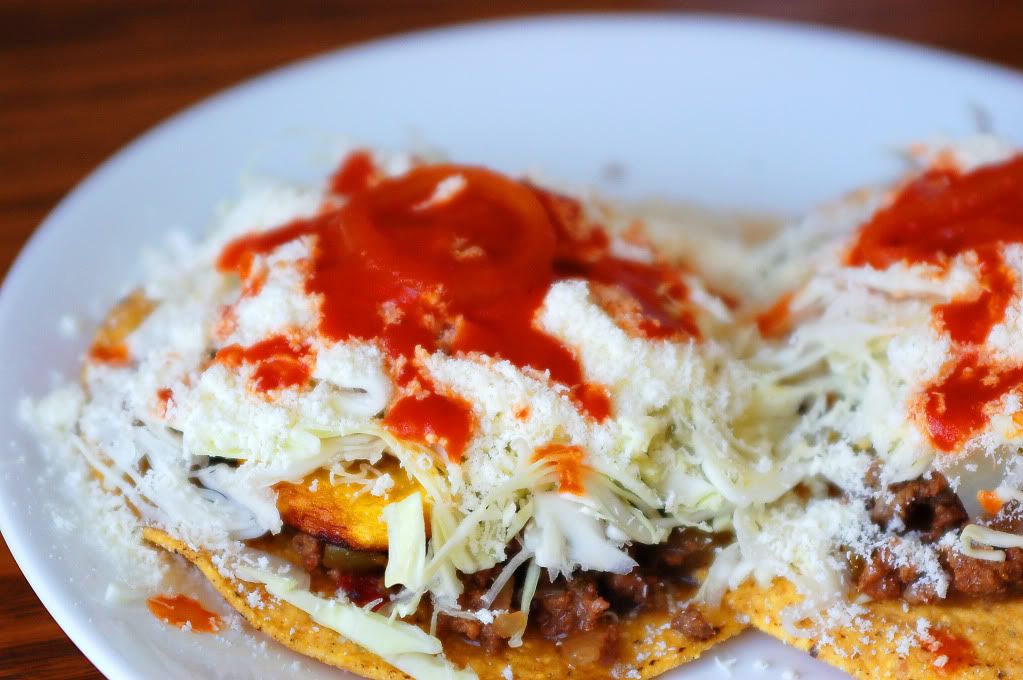
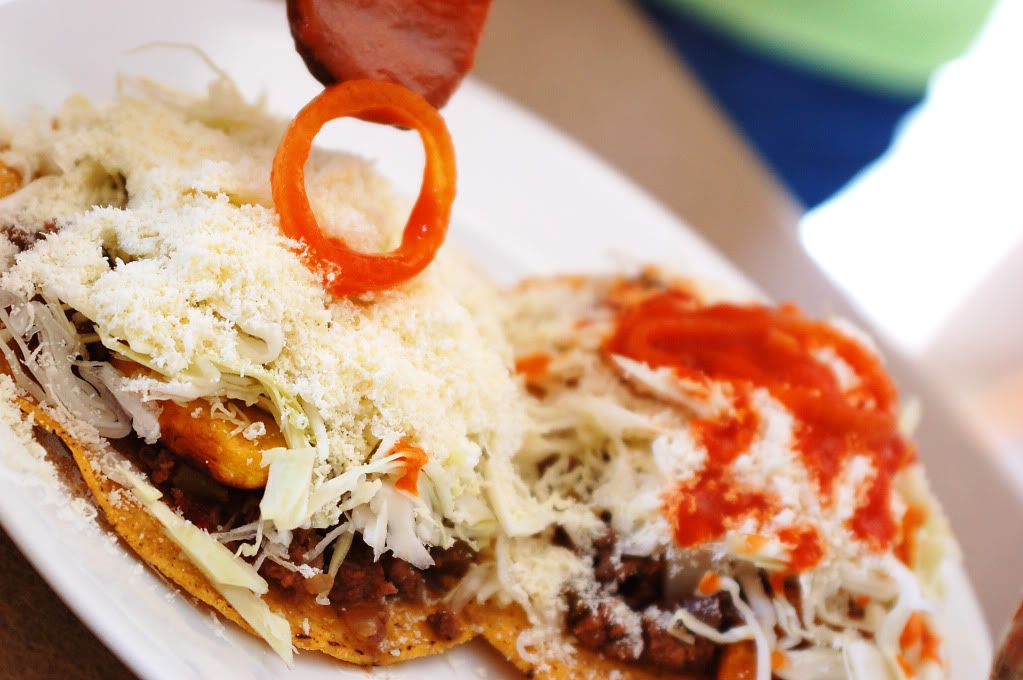
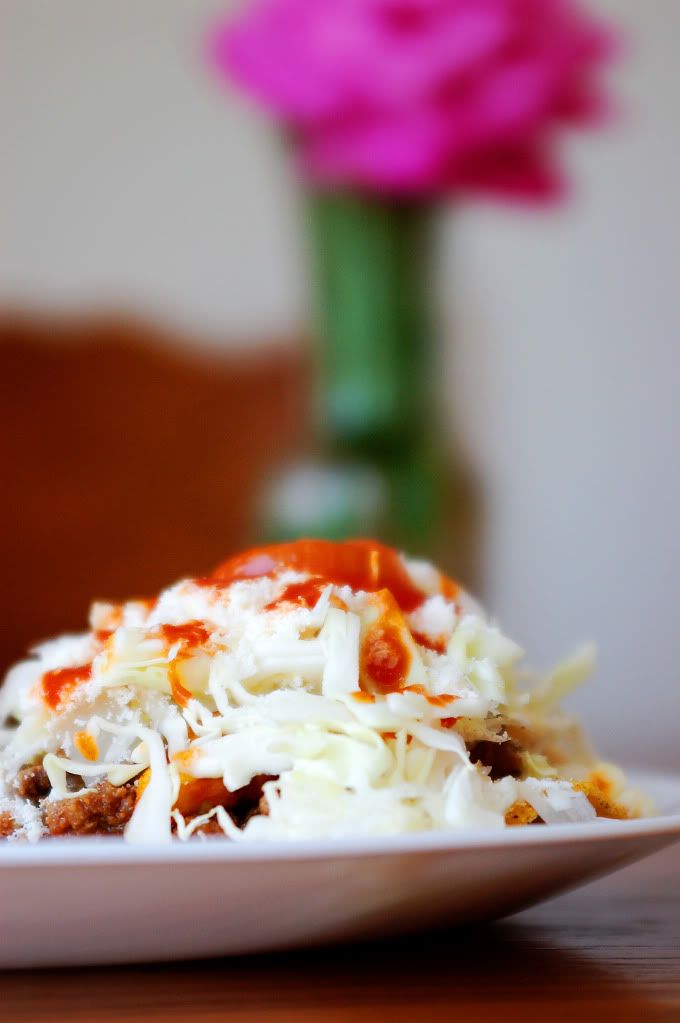
If you look at the picture above, you'll see that the Enchiladas are basically like what we would call a "tostada" in the states with the fried corn tortilla bottom, a layer of well flavored ground beef and layers of cabbage and salsa on top, but what you don't know about the Honduran Enchilada is that hidden between the layer of shredded cabbage and the meat are diced boiled potatoes, sliced boiled eggs, and fried sweet plantains. Those three ingredients, flavors, and contrasting textures take this dish to a whole new level.
Step 1: Prepare meat for marinating. Dice the following and mix well into a pound or more of ground beef:
1/2 onion
3 cloves garlic
1/2 green pepper
1 roma tomato
Lots of cumin
Sometimes I dump a bit of Worcestershire sauce into the meat.
plenty of salt and pepper
You can add ground achiote for color (also found in the mexican food spice section of your local grocer) Achiote isn't used for flavor, but plenty of it will give the meat a nice color. Color is
EVERYTHING in Honduran cooking. Everything.
Cover and let flavors mix. I would even recommend prepping the meat mixture the night before so that the flavors have time to marinate the meat well. While the meat soaks up all the flavor, prep the following:
Step 2: Boil Potatoes and EggsPeel 1-2 potatoes and place in pot of water on stove to boil. Place 2 or 3 eggs in with them to hard boil them. While those are on cooking:
Step 3: Shred Dry Cheese Also known as Queso Seco or Queso Cotijo from your local grocer - fresh Mexican food section. If you can't find any of these cheeses, Parmesan will have to do.
Step 4: Finely shred cabbage. This step should be a separate post in and of itself. Latins have a way with finely shredding cabbage. It's an art. [Note to self: Hone your skills of finely shredding cabbage and teach the rest of the blogging world how to do it too.] For now, all I can say is find a super-sharp knife (for dicing) and find the most dense head of cabbage and slice it paper thin.
Step 4: The sauce.Ingredients: Butter or olive oil, finely diced onion and garlic, tomato paste or sauce, chicken broth, salt, pepper, cumin and a bit of brown sugar. I will apologize ahead of time, but this sauce has no specific recipe. Trust me, it will all work out.
Saute onion and garlic in oil or butter until onion is clear. Add tomato paste or sauce and bring to boil. Add salt, pepper, and cumin to taste. A guestimate would be about a tsp of salt or a bit more, a dash of pepper and 1/2 tsp or more of cumin. Add broth to thin the sauce and give it a good flavor. At the end, add a pinch or seven of brown sugar and mix and dissolve in the boiling sauce. Remove from heat and cover until time to serve.
Step 5: Cook the meat.In a large pan, fry meat mixture until cooked through. Remove from heat and cover until time to serve.
Step 6: Fry the plantainsAgain, this might be a topic of another post in an of itself, but lets assume you have been successful in finding non-bruised, ripe, plantains. You've opened the peel (which is much harder to open than a banana - use a knife to slice it open) and you have sliced the plantain in half lengthwise and have heated the oil to fry them. Fry until golden brown. And try to refrain from eating them all before serving the enchiladas.
Step 7: The tortillaIf you're out for real authentic (which is so much better), then heat a pan of vegetable oil and hand-fry the corn tortillas for serving. If you're lazy like I sometimes am, I skip this step and use the ready-made tostadas. Armando hates that part. That's why it's so wonderful to have a mother-in-law that visits
and cooks. :)
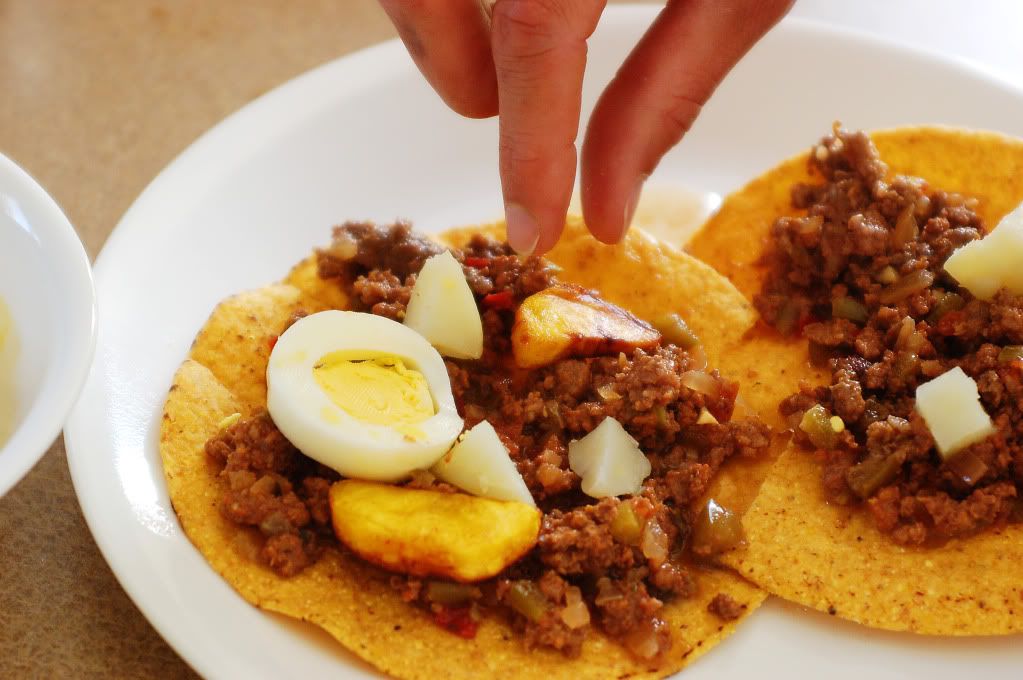
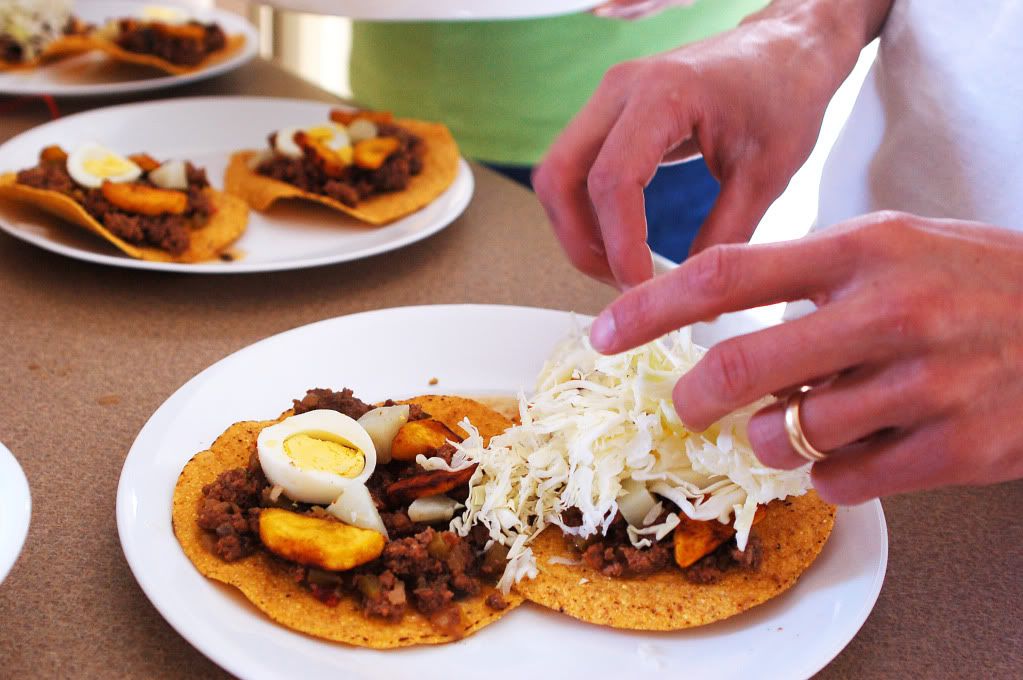
Finally: Putting it all togetherBegin by putting a spoonful or two or three of meat on the tostada. Then add hand-picked potatoes (3 or 4), a slice of boiled egg, and 2 or three pieces of fried plantain.

Add a small amount of finely shredded cabbage on top.

Cover generously with queso seco (dry cheese).

Drizzled the sauce over the top.
And enjoy trying to fit a bite into your mouth. Have a fork on hand to finish off what falls on your plate.

Perhaps we could call it a Honduran Sloppy-Joe.
I'd love to hear if you attempt to make this. And if you live anywhere within driving radius, please call, I'll be over for dinner!